
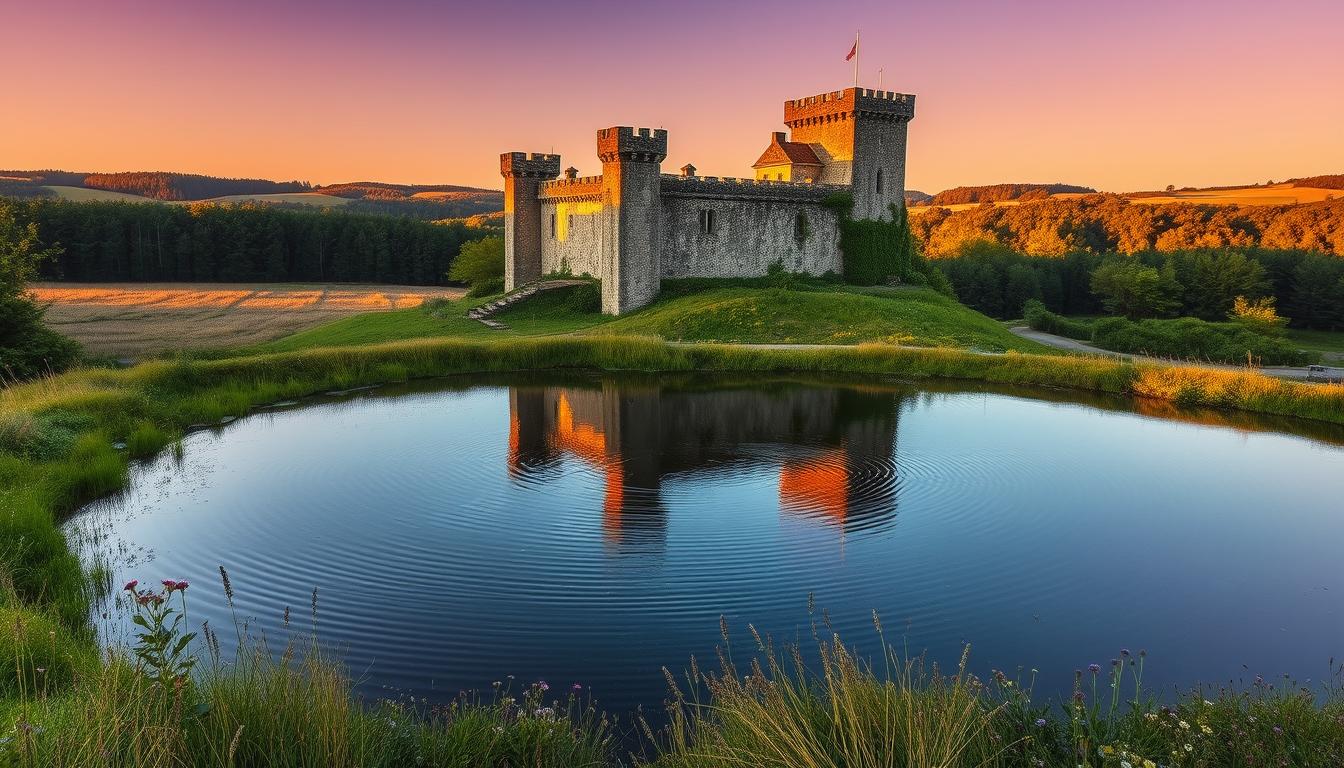
Step into layered history as we trace fortress towns where walls and gates still shape daily life.
Visitors to Vitré, Fougères and Saint-Malo walk along ramparts that tell a long story. These towns merged medieval fortifications with later upgrades, so a single castle visit often spans centuries.
Saint-Malo’s granite walls loop nearly 2 km and face the sea. They were rebuilt and extended in the 17th and 18th century by engineers working with Vauban’s traditions. You’ll notice restored sections next to raw stone that shows how time and repairs shaped the view.
This guide frames the frontier history that shaped each gate and curtain wall. Expect living streets, not museum displays: markets, families, and city life sit beside historic defenses. We explain key terms plainly so the architecture reads like a story, not a puzzle.
Key Takeaways
- Fortress towns blend daily life with long military history.
- Sections date from the 12th to the 18th century; look for century layers.
- Saint-Malo offers a 2 km circuit with excellent sea views.
- Many sites show both restored and original parts for contrast.
- Short walks connect walls, markets, and family-friendly stops.
The mystique of Brittany’s castles: centuries of stone, wars, and restoration
Stonework and battlements record a frontier shaped by raids, treaties, and steady rebuilding.
The Breton March began as a buffer by the end of the 7th century and set the pattern for later fortifications. Towns such as Vitré and Fougères evolved from wooden motte-and-bailey outposts into substantial stone complexes over several centuries.
From border to seat: the dukes brittany and the French Crown pushed continual construction so walls and towers adapted to new threats. You can often spot a 15th century keep beside an 18th century bastion.
What counts as well preserved? It means the core plan—walls, towers, and moat lines—survive enough to read the defense. Roofs or interiors may change, but the defensive logic stays visible.
| Feature | Origin | Visible elements |
|---|---|---|
| Vannes | Roman → 17th century | Ramparts, gardens, restored walls |
| Saint-Malo | 15th century → 18th century | Granite walls, civic castle, sea-facing bastions |
| Vitré / Fougères | Breton March era | Motte traces, stone keeps, curtain walls |
Abandoned castles Brittany: what “abandoned” looks like in the present day
Many former fortresses now wear mixed faces: restored halls, roofless wings, and active civic spaces. Today that variety shapes what visitors actually see on a visit.
How sites appear now. Château de Saint-Malo, built from the 15th through the 18th century, now houses the city town hall after its museums closed in 2019. Château de Vitré keeps its triangular medieval plan and grants access to towers and ramparts.
Suscinio offers curtain walls, patrol paths, a working drawbridge feel, loopholes, and machicolations. Hôtel Lagorce—Château de l’Hermine in Vannes blends an 18th-century mansion with medieval ruins and is under restoration; archaeologists found a courtyard, cellars, moat traces, and drawbridge area.
Ruins, restorations, and reuse
- “Abandoned” often means original use ended years ago, then returned through careful restoration.
- Many parts now serve the town: mayoral halls, museums, or event spaces.
- Expect mixed style: a polished staircase beside rough masonry; that contrast shows the site’s long story.
| Site | Key features | Public access |
|---|---|---|
| Saint-Malo | 15th–18th century layers, granite walls | Town hall, courtyards |
| Vitré | Triangular plan, towers | Museum, ramparts |
| Suscinio / Vannes | Curtain walls, drawbridge, moat traces | Tours, summer shows, ongoing restoration |
Evocative castles and châteaux to explore by era and atmosphere
Each château tells a different story—river strongholds, seaside bastions, and restored hunting lodges turned fortresses.
Château de Fougères
Fougères began as a wooden motte-and-bailey; a stone castle rose in 1166. It guarded the Breton March for 500 years. Self-guided circuits take about two hours and reward visitors with ramparts, towers, and wide river views.
Château de Vitré
The 13th-century triangular plan at Vitré reads clearly from the walls. Today the town hall and a museum sit inside centuries-old stone, and you can climb ramparts for a compact, civic experience.
Saint-Malo, Suscinio, and Josselin
Saint-Malo’s complex spans the 15th century to the 18th century and frames a dramatic sea gate and granite defenses.
Suscinio began as a leisure residence and was fortified in the 14th century. Curtain walls, a drawbridge, loopholes, and evening shows in July–August add atmosphere.
Josselin dates back to the 11th century; the current château reflects 1370 origins, 16th century conflict, use during the french revolution, and major 19th-century restoration. It sits on the Oust river and still reads like a living page of dukes brittany history.
- Tip: Prioritize Fougères for scale, Vitré for plan clarity, and Josselin for riverside romance.
Walk the ramparts: gates, towers, and fortifications that bring the past to life
Step onto the ramparts and feel how gates, towers, and sea air stitch town life to military design.
Saint-Malo’s circuit and ocean views
Saint-Malo offers a continuous 2 km loop of granite ramparts with eight principal gates. Construction began in the 12th century, was refired into shape after 1661, and saw Vauban-era extensions between 1708 and 1742.
Signage explains each part in plain terms, so a first walk shows both form and function.
Vannes: parterres, Porte Saint-Jean and the Tour du Connétable
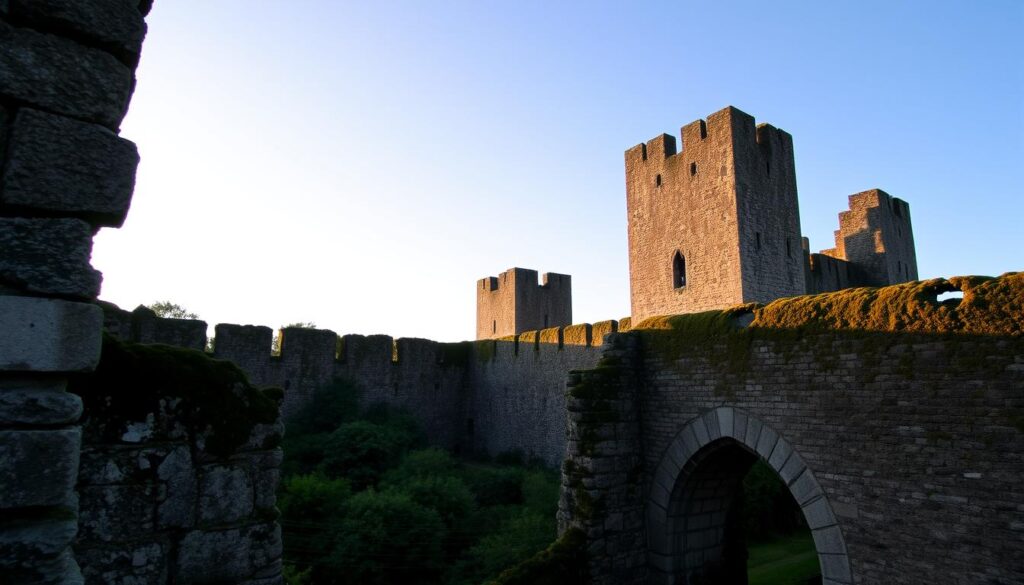
Vannes keeps about three-quarters of its ramparts, first raised in Roman times and reworked through the 17th century.
Start at Porte Saint-Jean, trace the wall to the Jardin des Remparts, and pause by the Tour du Connétable for clear seams where stone was rebuilt.
Porte Mordelaise, Rennes
Step under the Porte Mordelaise—also called the porte royale—and imagine future dukes swearing an oath between two stone towers.
The carriage gate, drawbridge and machicolations still read like ceremony in built form.
Concarneau’s island old town
Concarneau combines a modern city with a compact island town. Its 13th–15th century fortifications remain exceptionally well preserved.
Duck through a medieval gate, climb a narrow tower, then sit at a café inside the walls—perfect for families.
“The masonry tells a century-by-century story—spot where arrow slits became gun loops.”
- Make Saint-Malo your first ramparts walk for the length and sea views.
- Bring closed-toe shoes: uneven steps and narrow parapets are common.
- Walk early or late to avoid crowds and catch dramatic light on the stone.
| Site | Key features | Best for |
|---|---|---|
| Saint-Malo | 2 km circuit, eight gates, Vauban extensions | Sea views and interpretation panels |
| Vannes | Porte Saint-Jean, Tour du Connétable, gardens | Photography and short garden breaks |
| Concarneau | Island walls, medieval gate, compact town | Family-friendly exploration |
| Rennes (Porte Mordelaise) | Two stone towers, drawbridge, machicolations | Historic ceremony and civic ceremony sense |
Plan your route: map your castles, towns, and coastal forts
Map your stops so you can balance a long rampart walk with a relaxed lunch in a market hall.
Start with an interactive map. The Archaeology Travel guide hosts a live map of forts and sites that helps you cluster visits by distance and length. Pin a city circuit, then add a nearby castle and a lunch hall to keep the day easy.
Hôtel Lagorce and Vannes: layers and restoration
In Vannes, the Hôtel Lagorce is an 18th century mansion built over ducal foundations. Recent excavations found moat traces, drawbridge areas, and upper-story latrines. The mansion is under restoration and is slated to become the new city museum.
Seasonal tips: markets, halls, and gardens
Plan market mornings in Vannes to buy local products before a rampart stroll. Halle aux Poissons and Halle des Lices make easy lunch stops when weather shifts.
“Pick up fresh products at the market, then enjoy the Jardin des Remparts when the light is soft.”
- Trace river crossings on your map—Josselin’s Oust and Vannes’ harbor affect parking and views.
- Use castle icons and “views” waypoints to save time and spot the best photo gates.
- Limit sites per day by group size: one castle, one circuit, one hall keeps everyone happy.
| Focus | Why it helps | Practical tip |
|---|---|---|
| Interactive map | Clusters sites by distance and route | Pin city, castle, and hall |
| Hôtel Lagorce (mansion) | Shows multi-layered construction | Visit excavation displays at the museum |
| Markets & gardens | Supply local products and great light | Go Wed or Sat morning; visit Jardin des Remparts in July |
Conclusion
Walks through old towns reveal how ramparts and gates shaped daily life across centuries.
We saw how Saint-Malo’s ocean loop and Vannes’ gardens frame living fortifications. Small city circuits link towers, a gate or two, and clear views that show each century of work.
Fougères, Vitré, Suscinio, and Josselin remind us that a single castle can span medieval plans, post‑french revolution repairs, and modern reuse. Touch the stone and you feel years of order, conflict, and care.
Pause on a wall at sunset. Pick one tower to remember. Then pin a new route and return next year—these places keep telling their story, and the chapter is yours to edit.