
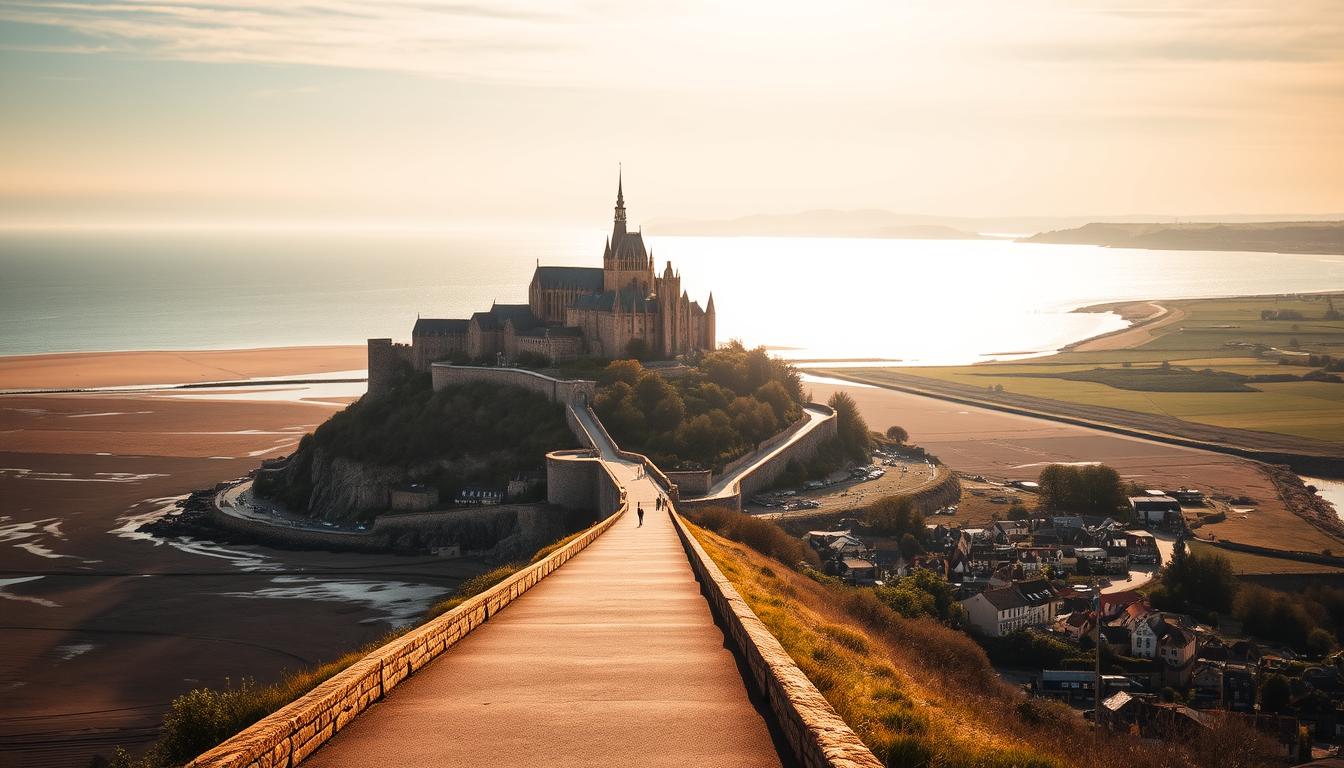
Planning a visit to one of France’s most famous tidal islands means balancing travel time, stairs, and crowds. I’ll walk you through a practical plan so you know what to expect and how to make the most of a long but rewarding day.
From Paris, the journey is about four hours by car or similar by bus. A direct train to Pontorson can take close to 3 hours 45 minutes with budget fares reported near €26 each way. Once there, expect roughly 350 steps to the Abbey unless you use the Fanils entrance to cut the climb.
Crowds can be heavy—3 million visitors a year—so aim for weekdays in shoulder season or plan to arrive early. Tickets for the Abbey run about €11–€13, and young EU residents may enter free. Parking sits off-site; a free Navette shuttle saves you a long walk.
Even though it’s a packed itinerary, a clear plan lets you enjoy the lanes, ramparts, and food without feeling rushed.
Key Takeaways
- Plan logistics first: tides, transport, and tickets.
- Choose tour, train-plus-shuttle, or driving based on rhythm and cost.
- Expect many stairs; use the Fanils entrance to reduce climbing.
- Visit weekdays in shoulder season to avoid peak crowds.
- Budget for the Abbey ticket and consider an audio guide.
- Use the free Navette from parking to save time and energy.
Plan your day like a pro: timing, tides, weather, and crowds
When you sync your schedule with tides and weather, the whole experience improves. A few simple choices shape whether your visit feels hectic or relaxed. Think about season, tides, and how many people you’ll meet.
When to go
Aim for a weekday in shoulder season — April or similar months often have fewer people. Weekends draw the largest crowds, so midweek mornings are calmer.
Check the tide schedule
Use the official tide calendar to decide the point of your visit. High tide gives the dramatic island effect. Low tide opens mudflats for guided walks, but safety matters—book a guide.
Weather realities
Weather calls the shots. Rain makes stone steps slippery and wind can make ramparts exposed. Pack layers, grippy shoes, and a compact umbrella to stay comfortable and safe.
Early starts and late stays
- Start early to beat the first wave of tours and trains.
- Stay late for golden-hour light and quieter lanes after most people leave.
- If weather turns, swap a mudflat tour for extra Abbey time or museum stops.
Getting from Paris to Mont Saint-Michel: the easiest way for a Mont Saint-Michel day trip
Your mode of travel decides whether you spend most hours on the road or exploring the abbey.
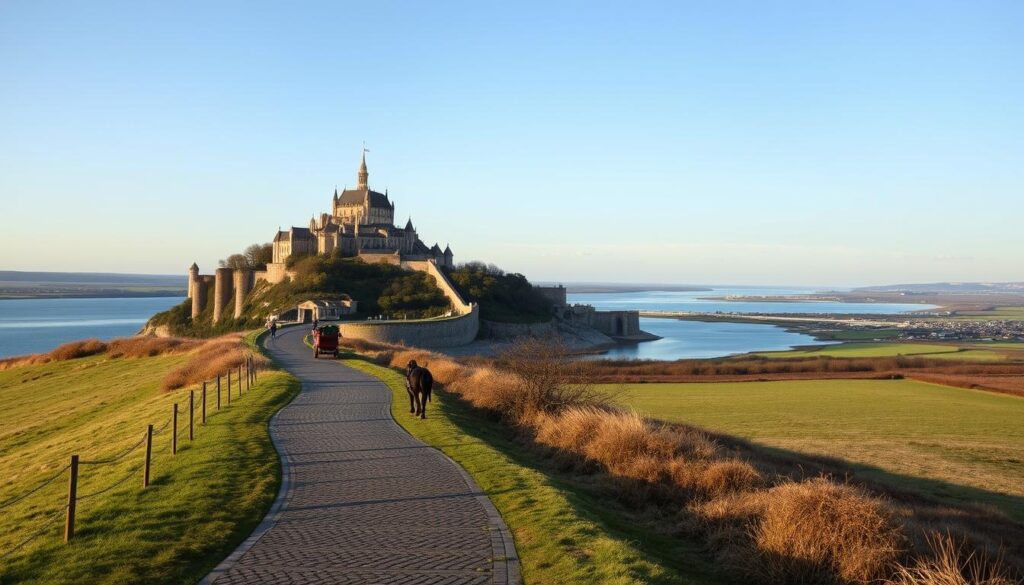
Join a Paris tour bus if you want a hands-off option. Tours typically run about 10 hours round-trip with roughly 4 hours on site. That makes this the easiest way to see mont saint michel without planning connections.
Train + shuttle via Rennes or Dol-de-Bretagne
The TGV-and-shuttle combo is the fastest rail way. Dol-de-Bretagne takes ~2h45 plus a direct bus. Rennes runs ~3h15 with a timed shuttle. Paris Montparnasse to Pontorson is about 3h45 and often has fares near €26 one-way.
Driving from Paris
Driving takes about 4 hours each way in normal traffic. Factor in rental pickup, tolls, and parking. A second driver helps on the return, but the round-trip push makes a drive mont saint option tiring for a single day.
Time and budget snapshot
“Choose tours for simplicity, trains for speed, and cars for flexibility.”
- Tour: low hassle, fixed schedule, ~4 hours on site.
- Train: fastest on-site time, timed shuttles reduce wait.
- Car: most flexible, more hours on the road and higher fatigue.
Bottom point: If you want the most visit mont michel time for the least stress, favor a reputable tour or the TGV-plus-shuttle combination.
On-the-ground logistics: parking, shuttles, tickets, stairs, and essentials
Before you climb, sort out parking, shuttles, and tickets to save time and stress. A quick plan on arrival makes the rest of your visit smoother and more relaxed.
Parking, the visitor center, and the free Navette
Park in the official lots by the visitor center and catch the free Navette bus to the island. Walking from the lot takes about 40 minutes, so reserve that time if you prefer the view.
Abbey entry and audio guides
Expect to pay roughly €11–€13 for an Abbey ticket; many tours include this and an audio guide. EU residents or permanent residents of France under 26 often enter free. The VoiceMap app is a paid alternative for self-guided narration.
Stairs and accessibility
Plan for about 350 steps to reach the top. Use the Fanils entrance to cut down the climb if you want fewer stairs.
The abbey has no elevators and narrow streets, so it is not wheelchair-friendly—strollers will also be a challenge.
Lockers, bathrooms, and payments
- Lockers: Available at the tourism office for ~€2 so you can move freely.
- Bathrooms: Sparse and often busy—use them when you can, especially before touring.
- Payments: Cards are widely accepted; cash needs are minimal.
“Bring grippy shoes and plan for shifting weather; safety on wet stone matters more than style.”
What to do and where to eat once you arrive
Start with a short plan on arrival so you save the best views and eating spots for prime time. A quick order—Abbey first, bay walk next, then food—keeps your hours flexible and reduces stress.
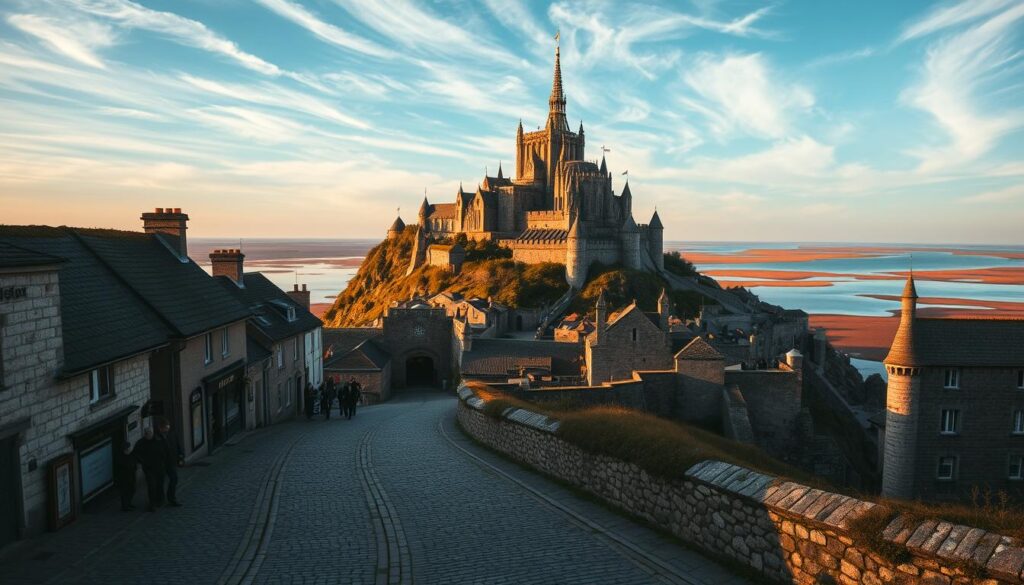
Visit the Abbey: must-see views, history, and why to book ahead
Begin at the Abbey to beat lines and catch the terraces when light is best. The Gothic abbey was finished in 1523, with origins back to 710 and a period as a prison from 1791–1863.
Buy a ticket in advance when possible. An audio guide brings the cloisters and refectories to life and saves time in queues.
Walk the bay at low tide: guided mudflat tours and safety considerations
At low tide, a guided bay walk is the safest way to explore the sands. Currents and quicksand-like patches can be deceptive, so choose a certified guide.
Allow extra time: tides change fast. A guide also explains the local ecology and history, which makes the walk a richer experience.
Restaurants and quick bites: La Mère Poulard omelets, cookies, and crowd tips
Decide early if you want the bucket-list splurge: La Mère Poulard omelets are iconic but pricey. Their cookies make a cheaper, tasty souvenir and are widely available off-site.
Restaurants fill at noon. Aim for an early or late lunch, or pick several quick bites so you keep enough time to visit the ramparts and lanes.
Day vs night: how lighting, tides, and fewer people transform the experience
As the sun lowers, the site quiets and stone warms to gold. Evening light and higher tide can change the whole atmosphere—perfect for photos and calmer walks.
“Save a few minutes to stand on the walls and simply take it in.”
- Start with the Abbey to get bearings and best views.
- Book tickets and an audio guide ahead when you can.
- Use a certified guide for any bay walk at low tide.
- Time meals to avoid peak crowds and keep your visit smooth.
Sample itinerary: a realistic Paris-Mont Saint-Michel day, step by step
Catch a first train or join a morning tour to maximize on-site visiting hours. That gives you more time for the abbey, lanes, and views without rushing.
Early morning departure
6:00–7:00 AM: Leave Paris from Montparnasse station. Choose a TGV with a timed shuttle or a guided tour bus that handles transfers and the Navette.
Tip: Grab breakfast to go so you can rest on the road and arrive ready to explore.
Midday on the island
Late morning: Head straight to the abbey. Present your ticket and move through while crowds are lighter.
Midday: Stop for lunch. Pick a quick counter-service if you want more time for viewpoints and ramparts.
Afternoon choices
Early afternoon: If the tide suits, join a guided bay walk to safely walk around the sands. If not, wander lanes and climb the walls for photo spots.
Late afternoon: Linger for golden hour. The site softens and many visitors leave, making saint michel night photos calmer.
“Allow buffer time for the shuttle or bus back to the parking and check your train departure at the station.”
- Plan for about four hours on-site if you join a tour.
- Confirm shuttle times if you arrived by train.
- Keep a flexible mindset to enjoy visiting mont saint at your own pace.
Conclusion
Finish by matching your pace to the light and the crowds for the best last impressions.
With a clear plan you can see the essentials in a single visit: the Abbey, lanes and ramparts, plus a tide-shaped view of the bay. Choose the way that fits you—tour, train-plus-shuttle, or car—so you spend time where it matters most.
Remember practical points: off-site parking, free shuttles, timed trains, and a ticketed Abbey. Aim for a weekday if possible, and start early or stay late to avoid peak people flows.
The site rewards intention: sync with the tide and save a few calm minutes on the walls. If the place captures you, plan to return at night for a gentler, very different view.