
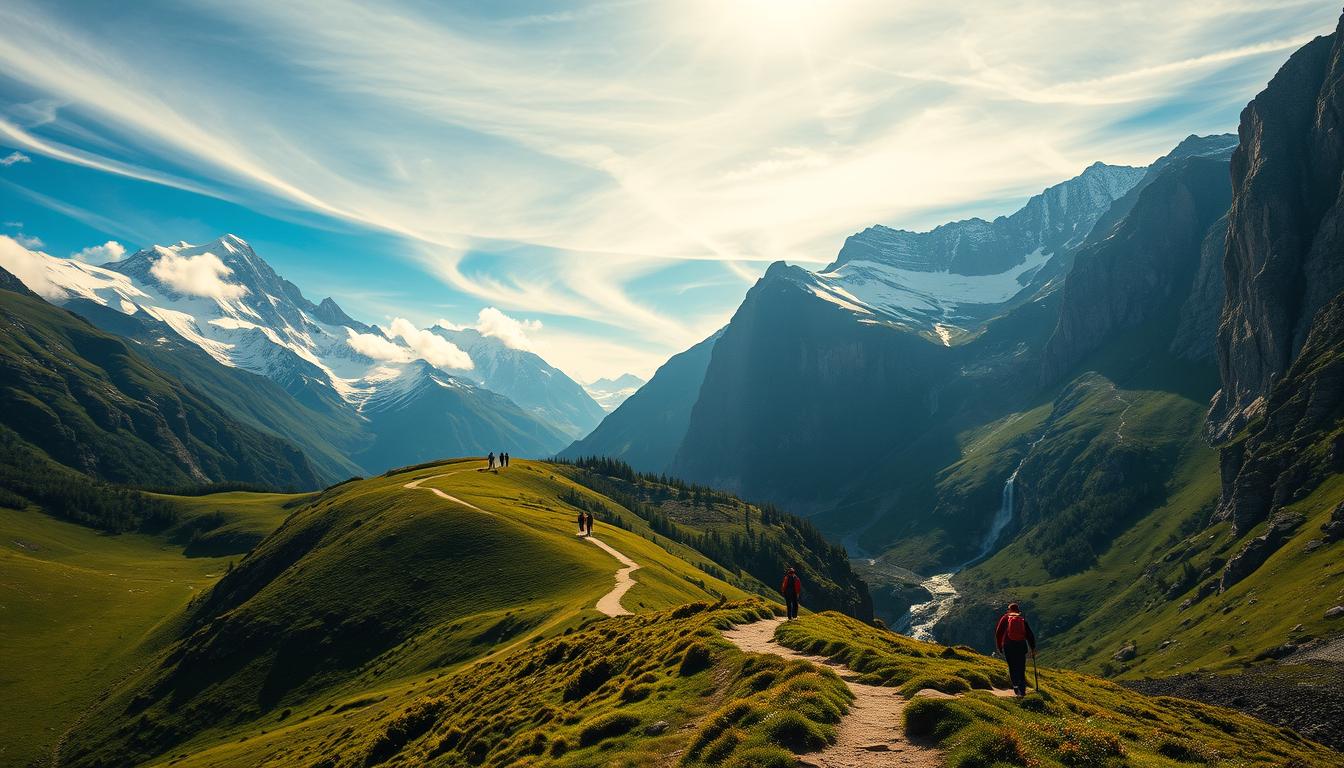
Dreaming of big scenery and easy access to high mountain days? The french alps offer sweeping landscapes, clear trails, and villages that welcome families and first-timers.
This mountain range formed millions of years ago and now spans several countries, with Mont Blanc towering as the highest peak at 4,808 meters. Towns like Chamonix and Annecy make great bases for exploring valleys, parks, and lakes.
Expect thousands of kilometers of marked trails, lift access to alpine starts, and a mix of short walks, day routes, and multi-day classics. I’ll share practical tips on when to go, how to manage elevation, and which resorts and parks suit your needs.
Key Takeaways
- Varied options: routes for families and seasoned walkers.
- Easy logistics: friendly towns and lift access simplify planning.
- Natural highlights: mont blanc, lakes, and protected parks.
- Timing matters: seasons affect trail access and weather.
- Choose by fit: pick short walks or multi-day classics to match your energy.
Why the French Alps are a hiker’s paradise right now
The region combines big peaks and compact valleys, making day options rich and simple to plan.
Stand beneath Mont Blanc in the morning, then wander a quiet valley by afternoon. That quick shift from high ridges to gentle meadows is what makes this mountain range so friendly to families and first-timers.
From the mont blanc massif to vast alpine valleys
Shared massifs—like the mont blanc massif—give you dramatic summits and easy access. Lift-served trailheads put hikers straight into the alpine without long approaches.
National parks to know
Protected parks such as Parc National de la Vanoise, Parc National des Écrins, and Mercantour offer clear signage, day hikes, and multi-day options.
- Glaciers, waterfalls, and flower fields offer varied photo ops.
- Classic passes link valleys for bite-size day sections or longer treks.
- Trailheads often start near villages, which makes logistics simple for families.
With thousands of kilometers of marked paths and reliable waymarking, the french alps let you scale ambitions up or down depending on weather and energy. It’s a compact range with huge variety—perfect for planning a first trip or returning to seek new views.
Best French Alps hiking routes and treks to add to your list
Pick routes that match your fitness and appetite for altitude—there’s a mix from short lakeside walks to summit circuits.
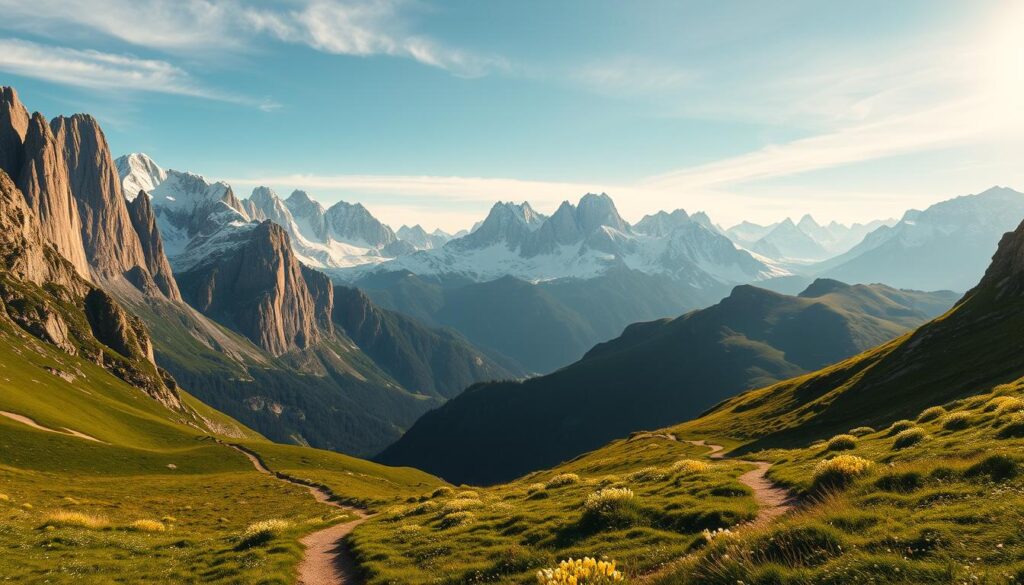
Tour du Mont Blanc (TMB): the ultimate bucket-list circuit. This multi-day tour mont blanc encircles the mont blanc massif with well-placed huts and flexible day segments. Ideal for trekking with staged distances and unforgettable views.
Day and summit options
- Dent du Villard (Courchevel 1650) — ~10.05 km, ~830 m elevation gain, summit 2,285 meters. Compact distance, big Tarentaise views.
- Le Petit Mont Blanc — Pralognan route: 9 km, 750 m gain; Courchevel approach: ~6h30, tougher with an optional Passage de Plassa loop.
- Aiguille de la Grande Sassière — 12 km, ~1,450 m gain to 3,747 m; alpine glaciers and long horizon lines reward the climb.
Family-friendly and lake circuits
- Circuit of the Lakes (Les Menuires) — 9.4 km, ~6h30, difficult terrain but superb Belleville Valley panoramas.
- Gorge aux Pigeons (Brides-les-Bains) — easy 1–1.5h, ~100 m altitude difference, peaceful forest views.
- Lou Balconies Trail (Val Thorens) — ~3h30; gentle, lakeside and family-friendly.
- Cascade des Poux (Courchevel 1650) — ~5 km, ~240 m gain; a relaxed walk to a waterfall.
“I like to group routes by distance and elevation: a hard summit day, a moderate circuit, then an easy valley walk for recovery.”
Tip: check total distance and elevation gain before you go. Match the route to your party’s comfort with altitude and exposure for the best day in the mountains.
French Alps hiking essentials: elevation, refuges, timing, safety, and gear
Manageable goals and smart gear keep your days on trail enjoyable and safe. Plan conservative elevation gain early in a trip and sip water often to limit altitude effects.
Managing elevation gain and altitude
Break climbs into steady intervals and aim for a consistent effort rather than speed. If anyone shows altitude symptoms, slow down and drop elevation.
Watch weather closely: storms can arrive fast at high level and change footing or visibility.
Refuges and route logistics
Refuges make hut-to-hut travel simple. Book early in peak months, check meal options, and confirm daily distances and level so each day feels doable.
Cable cars and funiculars trim approaches to high trailheads and help you plan shorter trek days when needed.
When to go and how many days
Early summer brings flowers and snow patches; mid-late summer is best for clear passes. Plan most trek days for 5–8 hours on trail and include easy recovery days for families.
Safety and gear
Glacier-adjacent trips demand care—good traction footwear and a small first-aid kit are non-negotiable. Carry a paper map or offline GPS as a backup to signposts in parc national areas like des ecrins.
Conclusion
Finish by pairing one big view day with a calm lakeside walk to balance effort and reward. The mont blanc area and the blanc massif reward bold treks, while parks like Vanoise and des ecrins serve gentle walks and clear trails.
Think in ranges and seasons: give yourself a couple of days to adapt to elevation and changing weather. If glaciers or high passes are on your list, add buffer days and stay flexible with route distance and plan.
Pick one hero trek, one easy family walk, and one backup option. Base yourself in a lively resort town for gear, rentals, and smart logistics. Small plans make big memories—enjoy the landscapes and the trail.